Tuesday, March 10, 2015
Deprecating ScriptDB and Domain Service in Apps Script
In the last few months, weve added a number of new features to Google Apps Script, including add-ons for Sheets and Docs and 7 new advanced services.
Were eager to maintain that momentum — focusing on new features that help you do more with Google Apps. As a result, were deprecating two Apps Script services for which good replacements exist elsewhere: ScriptDB (a NoSQL database that has been marked as experimental since it was introduced) and the Domain service (which encapsulates the GroupsManager, NicknameManager, and UserManager global objects).
Both ScriptDB and the Domain service will be turned off on November 20, 2014.
Before then, youll need to port any ScriptDB projects to another data store, like Google Cloud SQL or a third-party NoSQL database. Weve created a migration guide that explains how to export your data from ScriptDB and suggests a few alternate data stores. We have also improved the documentation for connecting to external databases through JDBC to make it a little easier for you to set up Cloud SQL with Apps Script.
The Domain service, which only Google Apps domain administrators can use, is replaced by the recently added Admin SDK Directory and Admin SDK Reports advanced services. Those advanced services also provide many new features that the Domain service does not — like managing users devices, OAuth tokens, and application-specific passwords — so we expect that youll prefer using them in the future.
 | Saurabh Gupta profile | twitter | blog As the product manager for Google Apps Script, Saurabh is responsible for Apps Script’s overall vision and direction. |

Sunday, February 15, 2015
How to do Unlimited Video and Voice Calls on Mobile for Free

For video calling
FaceTime
Tinychat
For video and voice calling
Nimbuzz
Oovoo
Also Read: The 12 Best Tools To Protect Your Password
Rocketalk
Skype
Fring
Viber
C Program to Count no of alphabates digits and spaces present in a file STORY TXT

#include<fstream.h>
#include<conio.h>
void main()
{
clrscr();
ifstream fin("STORY.TXT");
char ch;
int i,a=0,s=0,d=0;
while(fin)
{
fin.get(ch);
i=ch;
if(i>63&&i<91||i>96&&i<123)
a++;
else
if(ch== )
s++;
else
if(i>47&&i<58)
d++;
}
cout<<"No. OF Alphabates:"<<a;
cout<<"
No. Of Digits:"<<d;
cout<<"
No. Of Spaces:"<<s;
getch();
}
Best Way to Easily Find and Remove Broken Links from your Website or Blog

What are Broken Links?
Broken links are the links which leads to a page that actually does not exist. When you publish any article on your blog than search engines like Google indexe it and add your article information to its database. After some days or months if you delete your previously published article than it is removed from your blog database but not from Google database. If anyone search for a keyword related to your article on Google than your article link come up in the search results. And if he/she clicks on the link then it leads to a 404 error page.Also Read: The Top 10 Websites to create free Logo for your Blog
Also Read: Tips on How to Have Better SEO Results with Link Building
How to Find and Remove Broken Links?


An Insight into Apple iMovie app and its New Version 10 0 4
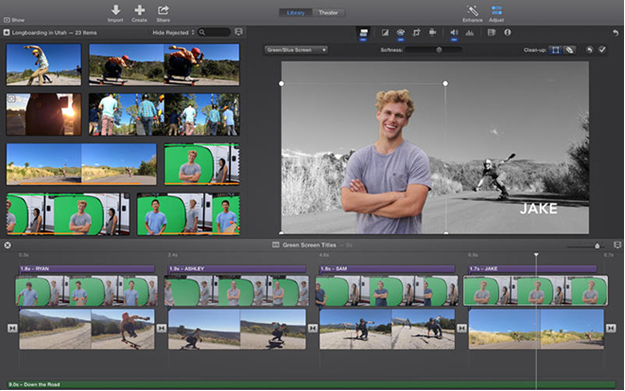
Introduction to iMovie and Its Features

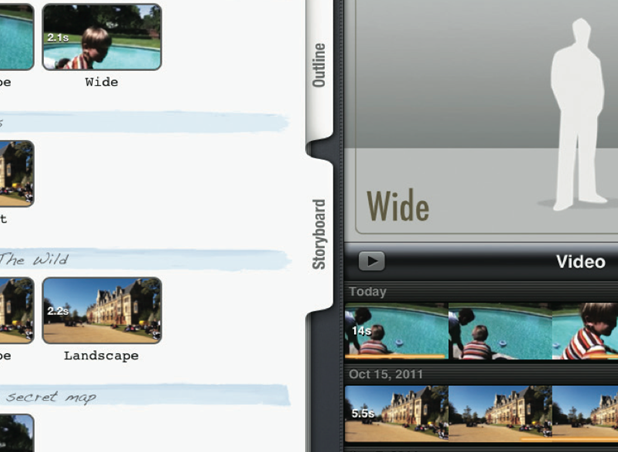
What has iMovie version 10.0.4 in Store for You?

Lets Wrap Up!
How to create MySQL Database and User name
What is MySQL:
MySQL is an open source database management software that helps users store, organize, and later retrieve data. It has a variety of options to grant specific users nuanced permissions within the tables and databases, May this tutorial gives you some kind of thinking about MySQL........!So now we lets start
How to Create MySQL Database and User:
Step 1: Login to your Web hosting account and open your control panel ( Cpanel ).
Step 2: Find Databases portion look like this: for example
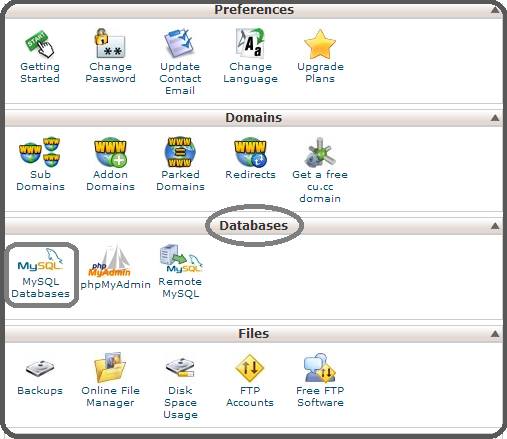
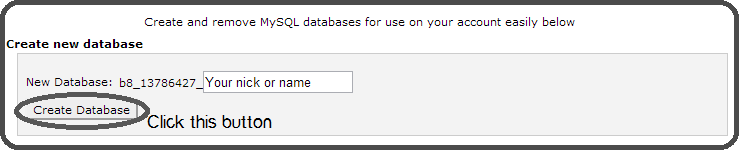
Step 3: Now click on MySQL Database and this screen will appeared look like given below image: Write your name or nick name as you want in New Database black box and click on Create Database.
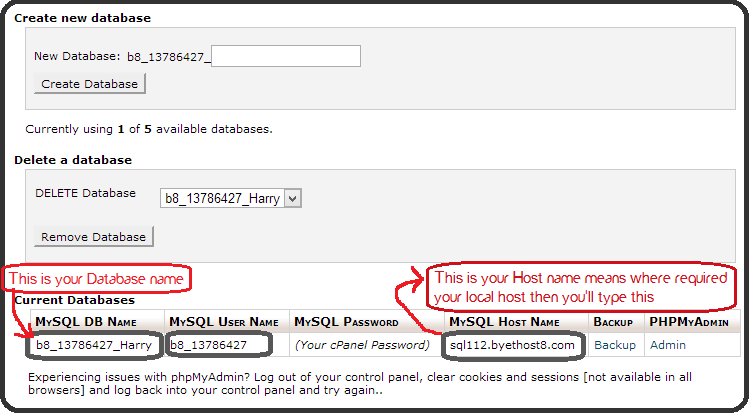
After click on Create Database button then you will see the given below screen. In the MySQL DB name means Your Database name and in the MySQL Host name means where you are required to enter your local host then you will type this ( your MySQL Host Name).
Saturday, February 14, 2015
Online Compilers The Top 5 Websites to Write Compile and Run Programs Online

Also Read: GCC Compiler: Download Code::Blocks 12.11 a Free C/C++ IDE
Also Read: How to Write and Run C/C++ Programs in Ubuntu (Linux)
The Top 5 Best Online Compilers
codepad.org
Codepad.org is an online compiler/interpreter, and a simple collaboration tool. Its a pastebin that executes code for you.
ideone.com
Ideone is something more than a pastebin. Its an online compiler and debugging tool which allows to compile and run code online in more than 40 programming languages.
compilr.com
Compilr is an online editor & sandbox that lets you write your code all from the comfort of your browser.
Also Read: How to create your own Header Files in C/C++?
Also Read: C4droid: Download Free C/C++ Compiler for Android Platform
compileonline.com
It is another good online compiler which allows writing and running programs in more than 50 programming languages.
onlinecompiler.net
It is not good and famous as above compilers. This allow you to write and run programs only in 6 languages i.e. c, c++, fortran, java, pascal and basic.
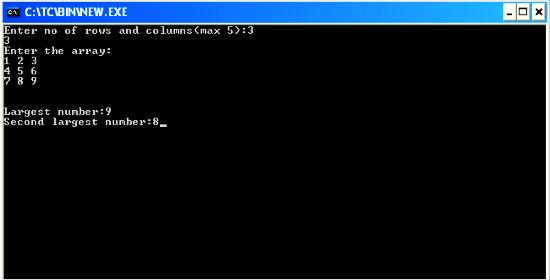
C program to find largest and second largest no from a 2D array
#include<iostream.h>
#include<conio.h>
void main()
{
clrscr();
int a[5][5],big1,big2,n,m,i,j;
cout<<"Enter no of rows and columns(max 5):";
cin>>m>>n;
cout<<"Enter the array:
";
for(i=0;i<m;i++)
for(j=0;j<n;++j)
cin>>a[i][j];
big1=a[0][0];
for(i=0;i<m;++i)
for(j=0;j<n;++j)
{
if(a[i][j]>big1)
big1=a[i][j];
}
big2=a[0][0];
for(i=0;i<m;++i)
for(j=0;j<n;++j)
{
if(a[i][j]>big2&&a[i][j]<big1)
big2=a[i][j];
}
cout<<"
Largest number:"<<big1;
cout<<"
Second largest number:"<<big2;
getch();
}
Whatsapp for Java Phones How to Download and Install
WhatsApp is an app used to send free sms to your friend who is also using the app via internet. WhatsApp is available for various platforms like android, windows, symbian and some s40 phones. One who have a smartphone can esily use Whatsapp.

Also Read: How to Install WhatsApp on PC
Steps to Download and Install Whatsapp for Java Phones
1. Download both the files (WhatsApp_Messenger.jar and WhatsApp_Messenger.jad) from the link given below in your PC (not in mobile)WhatsApp_Messenger.jar
3. You have done! Now try to run whatsapp from your mobile and enjoy using it.
Search Terms:
whatsapp for java phonewhatsapp java download
whatsapp for java mobile phone
Friday, February 13, 2015
Operators Rivisited Hierarchy of Operators NOT and Conditional Operator in C
Why? Ah… it’s a bit confusing and I don’t want to ruin the next important topics due to that operator.
NOT Operator (!)
The NOT operator (!) is used to reverse the results. This operator is mainly used as a key in big complex programs. By using this operator we can reverse the condition easily. Lets try to understand it with an example.If ( !(y>6) )
In the above statement I am writing a condition that y should be lesser than or equal to 6. I can also write the same condition as
If (y<=6)
Both the statements will give the same results. You can use anyone of them.
Hierarchy of Operators
I have given the hierarchy of operators after arithmetic operators. Now we have learnt about the logical operators (AND OR NOT) too. So the new hierarchy of operators is given below.
Conditional Operators
They are also called ternary operators. As we have to use three arguments to use this operator.General form of Conditional/Ternary operator
(Expression 1 ? expression 2 : expression 3)
It is generally used to avoid small if-else statement. Remember it is not the alternative of if-else clauses. It can used at some places.
Lets try to understand it with some simple example.
if (x==10)
Y=3;
else
Y=9;
In the above we are basically checking if x is equal to 10. If condition turns true then it will assign y as 3. Otherwise it will assign y as 9. The same task can be completed using ternary operator.
Y=(x==10 ? 3 : 9);
I hope everyone will agree with the fact that above example is very much compact than the earlier version.
Another example to use ternary operators is given below.
( x > 4 ? printf ( "Value is greater than 4" ) : printf ( "Value is less than 4" ) ) ;
Nested Conditional Operator
Well nested conditional operators are used very rarely but they are good to make the program compact.A small example of nested ternary operator is given below
Small = ( x < y ? ( x > z ? 9: 10 ) : ( y > z ? 14: 16 ) ) ;
In the above example small is the variable and it will store
9 if x<y and x>z
10 if x<y and x<z
14 if x>y and y>z
16 if x>y and y<z
Sounds confusing? Well that’s why they are used rarely. But like our example, it can sometimes make the program compact.
So that’s all for decision control instructions. I recommend you to make programs and practice for at least 2 days before proceeding further. In the next tutorial I will cover an overview to loops in C programming.
C program which reads your name from the keyboard and outputs a list of ASCII codes which represent your name

#include<stdio.h>
#include<conio.h>
void main()
{
int i;
char name[50];
clrscr();
printf("Enter your name: ");
gets(name);
printf("
Character ASCII Code");
for(i=0;name[i]!=
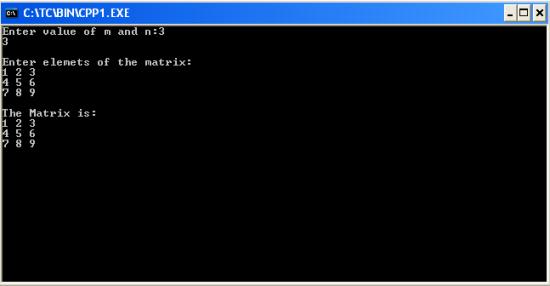
C program to read a matrix of size mxn from the keyboard and display the same on the screen
#include<iostream.h>
#include<conio.h>
void main()
{
clrscr(); //to clear the screen
int a[5][5],n,m,i,j;
cout<<"Enter value of m and n:";
cin>>m>>n;
cout<<"
Enter elemets of the matrix:
";
for(i=0;i<m;++i)
for(j=0;j<n;++j)
cin>>a[i][j];
cout<<"
The Matrix is:
";
for(i=0;i<m;++i)
{
for(j=0;j<n;++j)
cout<<a[i][j]<<" ";
cout<<"
";
}
getch(); //to stop the screen
}
Thursday, February 12, 2015
KMSpico v9 0 5 20131110 RC Offline Activator for Windows and Office

KMSpico - is the ideal tool to activate the final version of Windows 7/8 and Office 2010/2013. Activator does not require user intervention, the entire activation process takes place in the background, just run the activator and a couple of minutes to check the activation status of Windows and/or Office.
Features:
Universal (Activates Windows Vista/7/8 Pro/(8.1 Preview)/Enterprise/N/VL and Office 2010/2013 Retail/VL.)
• Does not require user intervention (enough to run the activator).
• Simultaneous activation immediately and Windows, and Office.
KMSpico Can do:
1. Acivate Windows 8.1 ( Review )
2. Acivate Windows 8 ( any edition)
3. Acivate Widows 7 ( Any Edition )
4. Acivate Windows Vista ( Any Edition )
PC Requirements:
Requirements: .NET 4.0 or Windows 8.
Activates Windows Vista/7/8 and Office 2010/2013.
Windows Server 2008/2008R2/2012
How to use:
1. Install KMSpico v8.9 in Windows.
2. Run automatically KMSELDI and AutoPico.
2.1 Make Tokens Backup.
2.2 Detect VL or Retail and depending of the License Status activate or convert to VL.
2.3 Activate for 180 days all VL products found.
3. Install a windows service that reactive every windows start.
4. Create a task schedule for AutoPico to run every 24 hours.
Change Log:
- Fixed know bugs.
- Improve retail key finder in W8.1
For Windows 8.1 RTM It contains :
- Retail key finder over internet only windows keys.
- Check for valid keys for the local installation.
- Install the first key and show the Installation ID for later phone activation.
- Create a validKeys.txt file with the valid keys found in internet.

Want to install Mac OS or any other linux OS and still be able to run your windows applications Read this
Virtual Machines vs Parallel Installations
I spent the entire day today in the realm of proprietary software setting up my MacBook laptop to run Windows XP Professional via Bootcamp. Having now used Virtual Machines and Parallel/Dual-Boot installations on a couple of machines I wanted to take a few minutes to share my experiences and thoughts on the subject. For those of you not familiar with the concepts, Virtual Machines or vmware and parallel installations are two different methods of running multiple operating systems from a single computer. This can be done either on a desktop or on a laptop and has both open source or proprietary options.
The ultimate decision of which option to go with will depend greatly on the individual’s usage habits and preferences. In my case I’ve grown to appreciate the advantages offered by parallel installations over vmware.
VIRTU
Virtual machines, or vmware, are an innovation that enables you to run one operating system within another. This process relies on the presence of a vmware program, such as VMware Fusion for Mac, or VirtualBox for Linux, and creates an instance of a “guest” OS that can be booted from within the “host” OS.
In the case of both proprietary and open source options, you begin by first installing the virtual machine software. Once this has been done you create a new virtual machine within the Vmware program. The steps to add the guest OS will depend on the Vmware software, but generally speaking there will be a few steps involved in which you identify what the host machine will be (Linux, Mac, or Windows) and designate how much RAM you wish to make available.
Once this has been done the the bulk of the process is extremely similar to that of a standard installation on a brand-new machine..
When you want to login to the guest OS, it’s just a matter of loading the Vmware program and selecting the operating system from the list of available options.
Advantages: Virtual machines give you access to two operating systems at once, and therefore expand the available functionality you have access to. Often times software is not available for all platforms, so use of virtual machines would enable Mac Users to run Microsoft Outlook for example; or Linux users to run Adobe Photoshop, or RPG games.
Virtual machines can also be moved or deleted exceptionally quickly because from the perspective of the host machine they are just one large file. The Instance of Windows XP I had previously installed on my MacBook was a single 25 GB file for example.

VMware for evaluating new systems: One of the key benefits of virtual machines – which I continue to use – is as a quick way to evaluate new operating systems and Linux distributions. I am constantly tinkering and test driving new distributions in a never ending quest for new and interesting features. By installing new OS test beds as virtual machines I’m able to quickly and easily explore them without making any fundamental changes to my system.
If I decide I don’t like the OS, I can delete the virtual instance without any adverse impact to the host machine.
Disadvantages: Due to the nature of the technology, use of Vmware represents extra burdens on your system than exist normally because you are using the same limited resources to run two operating systems. As a result programs on the host machine will not run as quickly.
Drivers are another big issue – particularly for Linux/Windows installations. Many hardware manufacturers do not produce drivers that support Linux-based operating systems the open source community has had to develop them themselves. In some cases – particularly webcameras – drivers are still being developed; and the versions that are currently available require more advanced computer skills to get running.
In my case the expertise required to implement the drivers is above my skillset, so I’m not able to use my Logitech Webcamera while logged into Ubuntu.
In the context of the discussion on VMWare, guest machines get their drivers and hardware information from the host. So despite the fact drivers are widely available for Windows, if you’re running XP as a virtual machine within Ubuntu you’re not going to be able to use the webcamera. This isn’t the case with parallel installations because the extra layer of the host-guest relationship doesn’t exist.
PARALLEL INSTALLATIONS
With Parallel Installations or Dual-Booting, you are running two completely separate operating systems on one box. In this case when you first power-up the computer you are prompted to select which system you wish to log into. Once logged in you will only have access to the software components that you’ve installed on that specific OS, and not both (as is the case with virtual machines).
Historically setting up a dual-booting system has been fairly complicated – especially for new users. However increasingly software companies have begun to ease the process.
Mac’s new Leopard release for example (OS 10.5) comes with a utility known as Bootcamp, which vastly simplifies the set-up process for installing Windows machines in parallel. The set-up is largely wizard based and takes you through the process of re-partitioning the harddrive to make way for the new Windows instantiation, and then rebooting into the Windows install process.
Additionally Ubuntu has gone one step further by enabling insterested parties to test drive the OS without actually installing it, to install an instance within Windows, or dual-boot the machine.
Advantages: One of the main advantage of parallel installations is the fact you can dedicate 100% of your system resources to the host machine. As a result programs and the operating system in general run much more quickly.
Secondly, and equally importantly, is the fact that you don’t face the same driver issues in dual-booting that you do in vmware. For example, if Linux is your OS of choice you can use Ubuntu as your primary default OS, but revert to Windows XP for web conferencing. (That said there are of course existing open source options for Linux users; this option is just one possibility.)
Finally though perhaps trivially, you won’t face issues of keyboard shortcuts with nearly the same frequency as virtual machines.
Disadvantages: Unlike virtual machines which are housed within single large files within the host machines folder heirarchy, parallel installations require dedicated partitions to function. So the process of setting up a dual-boot machine requires additional steps that change the landscape of your harddrive rather than working within the pre-existing conditions.
These changes can be undone later to a degree; but re-partitioning of a harddrive is never to be taken lightly. So this factor should be borne in mind (e.g. back-up first!)
Secondly you are restricted to the software and functionality of one operating system at a time.
MY OPINION
Having used both options on a few different machines I personally prefer dual-boot systems over virtual machines for general usage (as I said there is just no beating vmware for testbed installations). While it is nice to have the ability to quickly access PC software from the Mac without having to do a full restart, I found it cognitively difficult to work between the two operating systems within one environment.
For one, while in XP the key-board shortcuts were a hybrid – not quite PC, and definitely not Mac. So I was constantly making mistakes when typing that resulted in a loss of efficiency over time. I’ve heard that you can remap keys; but to be honest I wasn’t in love with vmware enough to bother.
Having set-up the same laptop with XP dualbooting through Bootcamp on the other hand, I’m much more pleased with the set-up. On my home machine I’ve got Ubuntu dual-booting with Windows XP Media edition AND a virtual instance of XP running within Ubuntu and have found that I never use the virtual machine. To me there’s nothing quite like logging into the full operating system.
But as I said, it all comes down to user preferences.
Previous Posts @ TechTicker:
Top 10 Websites to Improve Programming and Coding Skills
Also Read: List of Biggest and Popular Programming Contests
Top 10 Websites to Improve Programming and Coding Skills
Codechef

HackerRank

Project Euler

Topcoder

Programming Praxis

Codeeval

Code Jam

LeetCode

CodingBat

Coderbyte

C program to input number of weeks day 1 7 and translate to its equivalent name of the day of the week
+and+translate+to+its+equivalent+name+of+the+day+of+the+week.JPG)
#include<stdio.h>
#include<conio.h>
void main()
{
int ch;
clrscr(); //to clear the screen
printf("Enter number of weeks day(1-7):");
scanf("%d",&ch);
switch(ch)
{
case 1: printf("
Sunday");
break;
case 2: printf("
Monday");
break;
case 3: printf("
Tuesday");
break;
case 4: printf("
Wednesday");
break;
case 5: printf("
Thursday");
break;
case 6: printf("
Friday");
break;
case 7: printf("
Saturday");
break;
}
getch(); //to stop the screen
}